
7 Product Image Mistakes That Kill Sales on Marketplaces
Many marketplace sellers focus on pricing and advertising while ignoring one of the biggest conversion factors: product images. Discover the seven most common image mistakes that reduce clicks, engagement, and sales.
Jun 1, 2026
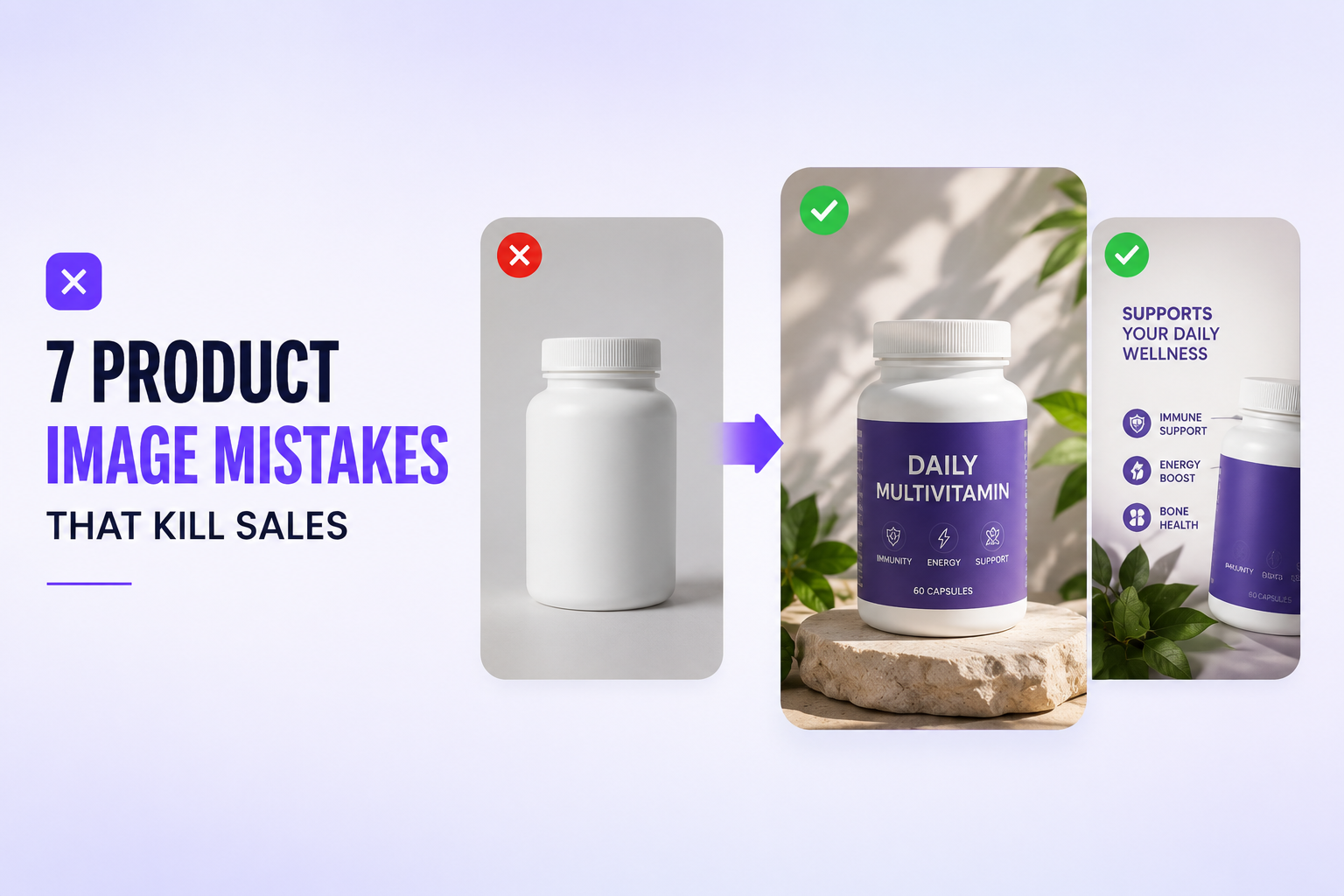
Many sellers spend time optimizing prices, advertising campaigns, and product descriptions but overlook one of the most important factors affecting sales: product images.
Customers often decide whether to click on a product within seconds. If your visuals fail to attract attention or communicate value, potential buyers may never even read your listing.
Here are seven common product image mistakes that can significantly reduce clicks, engagement, and conversions on marketplaces.
1. Using Plain Product Photos Without Context
A simple product photo on a white background is often not enough.
Customers want to understand how a product looks and feels in real life. Lifestyle images help buyers visualize ownership and increase confidence in their purchase decision.
For example, a kitchen gadget displayed in an actual kitchen environment is usually more compelling than a product cutout on a blank background.
2. Overloading Images With Text
Many sellers try to fit every product feature onto a single image.
The result is often cluttered visuals with tiny text that is difficult to read on mobile devices.
Instead of overwhelming customers with information, focus on one key benefit per image. Clean and simple visuals usually perform better than crowded designs.
3. Low-Quality or Blurry Images
Nothing reduces trust faster than poor image quality.
Blurry photos, compression artifacts, bad lighting, and low-resolution images can make even a great product look unprofessional.
High-quality visuals signal credibility and help products compete effectively in crowded marketplace categories.
4. Ignoring Mobile Users
Most marketplace traffic comes from mobile devices.
Images that look perfect on a desktop screen may become unreadable on a smartphone.
Before publishing product images, always check:
- Text readability
- Product visibility
- Icon sizes
- Overall layout
If customers cannot understand your image in two seconds on a phone, it needs improvement.
5. Using the Same Images on Every Marketplace
Different marketplaces have different audiences and visual trends.
An image that performs well on Amazon may not generate the same results on Wildberries or Ozon.
Successful sellers often adapt their visuals for each platform, adjusting layouts, colors, messaging, and presentation styles to match customer expectations.
6. Failing to Highlight Key Benefits
Many listings show the product but fail to explain why customers should buy it.
Strong product images communicate benefits immediately.
Instead of simply displaying a water bottle, for example, highlight features such as:
- Leak-proof design
- Temperature retention
- Lightweight construction
- BPA-free materials
Customers should understand the product's value before reading the description.
7. Inconsistent Branding Across Images
A product gallery should feel cohesive.
Using different fonts, colors, styles, and visual elements across images creates a fragmented experience that can reduce trust.
Consistent branding helps products appear more professional and memorable while strengthening customer confidence.
How AI Helps Avoid These Mistakes
Modern AI image generation tools make it easier than ever to create professional marketplace visuals.
Sellers can quickly generate:
- Lifestyle product images
- Marketplace-specific designs
- Product infographics
- Promotional banners
- Multiple visual variations for testing
This allows businesses to improve image quality, maintain consistency, and create optimized visuals without expensive photoshoots or design teams.
Final Thoughts
Product images are often the first thing customers notice when browsing a marketplace. Even small mistakes can lead to lower click-through rates and missed sales opportunities.
By avoiding these seven common issues and investing in high-quality visuals, sellers can improve product presentation, increase customer engagement, and boost conversions across Amazon, Wildberries, Ozon, and other marketplaces
Ready to create your own product images?
Upload a product photo and generate marketplace-ready AI images with Sellixy in minutes.